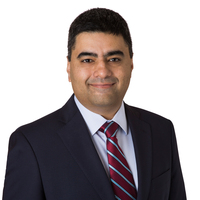
Psychiatry 3.0 explores the future of mental health through the lens of whole-person care, neuroscience, and thoughtful clinical practice. Curated by Dr. Umar Latif, with occasional guest posts from like-minded clinicians and thinkers, this newsletter invites readers into a deeper conversation about what’s working, what isn’t, and how mental health care can evolve for the better.
Why This—And Why Now?
Mental health care is changing… but not always in the ways we need it to.
For years, I’ve watched the system grow faster but not necessarily better: shorter visits, more diagnosis codes, more prescriptions. And while those tools have their place, they often fall short of what people truly need — to feel seen, understood, and supported through complexity. Too often, psychiatry is practiced inside the constraints of managed care — a system where it’s not your care that’s being managed, but rather someone else’s bottom line. No wonder moral injury and burnout are becoming quiet epidemics among clinicians.
A note on terminology: The term ‘Psychiatry 3.0’ has been used elsewhere — for example, by Dr. Nolan Williams at Stanford to describe advanced TMS like the SAINT protocols. While these represent important innovations in interventional psychiatry, I view them as a significant 2.5 style evolution, building on biological psychiatry with cutting-edge tools, but still within the same 2.0 paradigm. In contrast, my adoption of 3.0 reflects a broader shift: one rooted in integrative and functional psychiatry, and aligned with the Medicine 3.0 framework — emphasizing whole-person, root-cause, and systems-based care.
The Evolution of Psychiatry in parallel to the Medicine 3.0 movement.
Psychiatry 1.0 was conversation-led. Rooted in psychoanalysis and classic talk therapy, it emphasized uncovering the unconscious through insight, introspection, and long-form psychotherapy.
Psychiatry 2.0 became biologically driven. This was the era of neurotransmitters, DSM categories, and medication management. It brought psychopharmacology, interventional tools like ECT and TMS, and a growing emphasis on symptom reduction.
Psychiatry 3.0 is a whole-person paradigm, integrating the best of neuroscience and psychotherapy with root-cause functional psychiatry, lifestyle medicine and integrative medicine — a comprehensive, evidence-informed approach.
This model draws on multiple disciplines and technologies to support deeper, more personalized care:
Integrative and Functional: addressing nutrition, sleep, inflammation, and trauma.
Precision-based: using genomics, biomarkers, and personalized data.
Digitally empowered: Leveraging AI tools, remote care, healthcare AI, and self-tracking.
Collaborative and human-centered: honoring context, culture, and meaning.
Grounded in Evidence: Informed by psychiatry, neuroscience, and systems-level thinking.
Psychiatry 3.0 doesn’t abandon what came before — it reimagines it. It’s the art of understanding, enhanced by the tools of today and the wisdom of lived experience. It blends the clinical with the curious. It honors both data and story. And it looks for root causes instead of settling for surface-level labels.
A Bit About Me
I'm currently pursuing a year-long fellowship in Functional & Integrative Psychiatry — part of my ongoing effort to understand the full picture of mind–body health beyond the prescription pad. Writing is thinking — and this blog is my way of sharing what I’m learning along the way.
I’m a triple board-certified psychiatrist in General, Geriatric, and Addiction Psychiatry, a Distinguished Fellow of the American Psychiatric Association, and an Associate Clinical Professor at Texas A&M School of Medicine. In my clinical roles, I serve as the Medical Director at my private practice The Noesis Clinic and Chief Medical Officer at Enterhealth.
But more than credentials, what has shaped me most over the past 20 years of clinical work are the stories I’ve been trusted with — and the patients who’ve taught me how to listen better.
"The practice of medicine is an art, not a trade; a calling, not a business; a calling in which your heart will be exercised equally with your head."— Sir William Osler
What to Expect Here
Each post explores the future of psychiatry by diving beneath surface-level symptoms and into root causes. We’ll examine the tools shaping modern care — from functional and lifestyle approaches to precision psychiatry, digital innovation, and narrative meaning-making.
Topics we’ll explore include:
Root-cause psychiatry and functional strategies
Personalized approaches that address underlying factors and promote holistic well-being.
Neuroscience, trauma, and the mind-body connection
Exploring how brain science, trauma, and the interplay between mind and body shape mental health.
Reflections on care, diagnosis, and meaning
Thoughtful perspectives on the experience of care, the art of diagnosis, and the search for meaning in healing.
Technology and emerging trends in mental health
Insights into digital innovation, health AI, and new tools reshaping psychiatric care.
Perspectives for clinicians, caregivers, and curious minds
Practical ideas and reflections for anyone invested in mental health — professionally or personally.
Knowing myself, my original name for this blog was ‘Tangential Writing’ (a nod to tangential thinking).” 🙂 Wherever curiosity leads — from AI and aging to burnout and moral injury — you’ll find ideas grounded in science and empathy.
Yet the central theme will remain: How do we understand more deeply, and care more wisely?
Stay Connected
If any of this resonates, I hope you’ll subscribe and share. I plan to publish a new post every week, delivered straight to your inbox through this newsletter. I'm always open to suggestions — if there’s a topic you’d like me to explore, let me know.
If you know someone who might appreciate this perspective, feel free to forward and share this post and help grow the conversation.
Whether you're a clinician, a caregiver, or simply someone seeking insight, I’m glad you’re here. Let’s imagine a better path to healing.
Welcome to Psychiatry 3.0.
Let’s begin.